
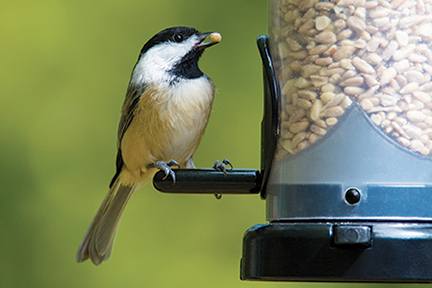
Keep your backyard birds healthy with simple, regular feeder-cleaning habits.
How to Clean Your Bird Feeder
Keeping your bird feeders clean is one of the most important ways you can help keep backyard birds healthy. Regular cleaning helps prevent the spread of disease, keeps mold and bacteria from building up, and makes your feeders more inviting to the birds you love watching.
Quick Cleaning Checklist
- Scrub feeder with warm, soapy water and a brush
- Sanitize with a 10% household bleach solution
- Rinse thoroughly until you no longer smell bleach
- Let the feeder dry completely
- Refill with fresh food
- Repeat regularly (every 1–2 weeks, more often in wet weather)
Step-by-Step Feeder Cleaning
- Empty the feeder
Discard any old or moldy seed, hulls, or debris. If the seed is clumped, damp, or smells “off,” throw it away. - Scrub with soapy water
Fill a bucket or sink with warm, soapy water (mild dish soap is fine). Use a dedicated feeder brush to scrub all surfaces, including perches, seams, feeding ports, and the base. - Sanitize with a bleach solution
Mix a 10% bleach solution using regular household bleach (1 part bleach to 9 parts water). Soak or thoroughly wipe all feeder surfaces with the solution and let it sit for at least 10 minutes to disinfect. - Rinse very thoroughly
Rinse the feeder with clean water until you can no longer smell bleach. Make sure corners, ports, and seams are rinsed well. - Dry completely
Allow the feeder to air dry fully before refilling. A completely dry feeder helps prevent mold and clumping seed. - Refill with fresh food
Use fresh, high-quality seed, suet, or nectar. Toss anything damp, moldy, or clumped. - Repeat regularly
Normal conditions: Clean at least every 2 weeks.
Wet weather or heavy use: Clean weekly or more often.
Feeder Materials & Long-Term Care
Wooden Feeder Care
Wooden feeders will naturally fade over the years. It is not necessary to treat wood feeders with any products; however, if you wish to maintain the appearance of your feeder, you can follow these simple directions.
Redwood or Cedar Feeders
Redwood and cedar are widely used outdoors because of their excellent natural weathering properties. Under normal conditions, this wood remains functional for many years without any maintenance, but it will fade in color as it weathers.
If you would like to maintain the attractiveness of the wood, you can give it a coat of wood sealer or linseed oil every few years. It is important to apply water-soluble stain or wood sealer to the outside area of the feeder only. Never apply directly to the eating surface of the bird feeder.
Pine Feeders
Pine feeders weather nicely but will fade with time. If you want to refresh their appearance, apply linseed oil or a water-soluble stain every few years as needed.
Copper Information & Care
Copper adds warmth and color that cannot be duplicated by any other type of metal and has the advantage of being highly corrosion-resistant. If left untreated, copper will discolor rapidly to a pale green patina.
To restore the brilliant luster of your copper feeder:
- Polish the copper with a copper cleaner/varnish.
- Seal the copper with a clear lacquer to help preserve the shine.
Tube Feeders
Wild Birds Unlimited tube feeders are designed with armored feeding stations and have a seed deflector that ensures all seed is eaten and does not sit at the bottom of the feeder. Wild Birds Unlimited seed tube feeders are made of clear polycarbonate plastic.
To clean seed tube and finch feeders, simply use a brush and warm water. If mold or debris is present, use a solution of nine parts water to one part bleach, rinse well, dry, and refill with fresh seed. Cleaning your feeders will help them look better longer and decreases the possibility of spreading sickness and disease among your birds.
Feeder Cleaning Videos
Watch these quick how-to clips for visual guidance. Note: Some browsers block autoplay with sound, so these videos are set to start muted, loop, and play inline where supported.
Bird Feeder Cleaning Basics – a quick overview of how to safely clean your feeder.
Eliminator Feeder Cleaning – step-by-step instructions for safely cleaning and maintaining your WBU Eliminator™ squirrel-proof feeder.
Learn More
For more details on why and how to clean your bird feeders, visit the Cornell Lab of Ornithology’s All About Birds article: How to Clean Your Bird Feeder .
Need Help with Feeder Cleaning?
Stop by the store for feeder brushes, cleaning supplies, and expert advice on keeping your backyard birds healthy and happy. We’re always glad to help you choose the right food and feeders for your yard.